About current events and general interest related to family, religion, and philosophy.
Welcome to Life, Family, and Religion
Thanks for visiting my blog. I will ponder issues and disscuss events related to living life as a Christian with a family. This is a broad topic, of course, so just about anything is fair game. Check back or suggest topics for discussion.
Friday, June 26, 2015
The Day the World Changed
Not very often does the world change
overnight. I suppose that a fundamental change in the fabric of the
world only happens on very rare occasions. But it has happened. One
day the world was a certain way and when people woke up the next
morning things were radically different. But I will come back to this
in a moment.
On June 26, 2015 the
Supreme Court of the United States of America ruled that same sex
marriage is a constitutional right (or something to that effect).
Some rejoice while others mourn. This ruling will be debated and
discussed without end for some time to come.
Many people are concerned
about what effect this decision will have on the Church. Now that the
United States has accepted a definition of marriage that is contrary
to a biblical view of marriage, what will happen to the church? To
seek to provide an answer to that question, I will ask a few more
questions.
First, now that the Supreme
Court has ruled, are there still people in the United States who do
not have a relationship with Jesus Christ? Did the ruling somehow
eliminate those who need the Gospel from our shores? The reality is
that there are still millions of people in our country who are
outside of God's family and who need a savior. The church should not
panic, we still have the same work to do today that we had yesterday.
Second, now that nine
justices have voted five to four that same sex marriage is
constitutional, did that ruling remove God from his throne? Is God no
longer sovereign because of this ruling? God is the same today as he
was yesterday. Overthrowing thousands of years of historical
precedence by the Supreme Court of the United States has not
overthrown the King of the Universe. The Alpha and Omega is not
threatened by our country and its laws. The church should not wring
its hands in fear, God is still as much in control as he has always
been.
Third, has the judicial
ruling taken away the power of the Gospel of Jesus Christ? Are lives
no longer able to be reconciled to God because of the votes of five
judges? The power of the Gospel to change the heart of a human has
not been diminished. The atoning work of Jesus is still the only hope
for the world and still has the power to transform rebellious people
into God's family. We should be about the same thing we should have
always been about, sharing the good news of Jesus Christ.
Although many Americans are
upset about the change in direction of our country, I suspect that
the Sun will still rise in the morning. People who are living in
rebellion to God will still need the Gospel tomorrow as they did
yesterday. The fields are still ready to be harvested and workers are
still needed to bring in the harvest.
One thing this ruling may
do is show people that the United States of America is not the savior
of the world. Sometimes I think we forget that. Jesus saves people,
not the good ole USA. People may be concerned that our country is
getting farther away from God, but we have many laws in our country
that allow for sin. Marriage is a high profile issue, but it is not
the only issue that departs from God's will.
The United States, however
bad we might think things are getting, is still not as hostile to
Christianity as Rome was. (At least we are not crucifying Christians,
well not yet anyway). The Church survived Rome and will survive the
United States of America also.
Will things change in our
country as a result of this ruling? It seems so. It seems that same
sex couples will be treated the same way that opposite sex couples
are treated in the eyes of the law. This ruling may mean that our
churches may face legal challenges in the future. This may mean that
people and organizations might try to force Christians to replace the
understanding of marriage, derived from scripture, with a legal
definition declared by the court. There will be challenges, but there
have always been challenges.
There was a day that
changed the world, but it was not this day. The day that changed the
world was not June 26, 2015, it was a day a little over two thousand
years ago. On that day a cosmic event signaled the birth of the King
of Kings. On that day God took on humanity and lived among his
people. Jesus was born so that he could die to save us from our sins.
He accomplished his mission and left us work to do. We carry on,
hoping in him and knowing that he has overcome the world.
I friend of mine wrote a post about why he (a pastor and Army Guard Chaplain) will not celebrate Independence Day in his church. Click here for his post. Page makes some good points in his article. I have been contemplating proper worship for some time. Since I am now serving as a pastor, worship planning is my responsibility and I am no longer simply a participant. I will use the prompting of my friend to put a few of my own thoughts on the subject online for your consideration.
First, I am also a veteran. I served as a Navy Hospital Corpsman for six years (1992-1998). I missed the first Gulf war by several months as I was finishing High School, but enlisted shortly after graduation. I served my country out of a sense of patriotism. I was proud to serve and to continue a history of military service from both sides of my family. My parents both served as did others on both sides of the family. My parents even met in Japan (Mom is from Pennsylvania and Dad is from Florida, both served in the Air Force and would not have met but for their service). I think the USA is a great country. I am proud to be an American. We have our problems, but I believe we are an exceptional country.
Having said that, I am dismayed at the corruption of worship in the Church. Worship of God is primary. Well, it should be primary. In fact, in our weekly gatherings (those things we call our worship service) we should worship God exclusively. Unfortunately, we often sing praise to things other than God. We often attribute worth (or to say it differently, worship) things other than God.
Some will say, "Wait Wade!! What do you mean we praise and worship things other than God? That is preposterous!" Oh really? Is it that out of line to claim that we praise things other than God, when we gather for worship? Take the Lee Greenwood song, God Bless the USA. Click here for the lyrics if you would like to read them. I like the song. I agree with the sentiment of the song.
Here is the video with the lyrics. God ahead and play it now if you want. Sing it if you want. Cry a bit if you need to. Continue reading when you are done.
I WOULD NEVER permit this song to be sung in a worship service.
I would sing it at a picnic, concert, or when it comes on the radio. But I would not allow this in a service that we have dedicated to God. The song is not about God and does not praise or attribute worth to God. This is a beautiful song about a person's love for their country and some of the attributes of the country. Asking God to bless the USA does not make the song about God and it does not make it a praise or worship song. It simply makes it a song that mentions/acknowledges God. But since the song is about something other than God, it does not belong in a service that is supposed to be about attributing worth to God.
God is jealous. We overlook jealousy attribute of God sometimes. I think that is because we view jealousy in a negative light. We tell our kids not to be jealous of others. But when it comes to God, he is right to be jealous. The sense in which God is jealous is the sense of guarding what is rightfully his. All praise and worship are due God. God is right to guard what he is due.
Christians must be careful when we gather for worship. We need to ensure that we do not worship something other than God in a service we have dedicated to God. We would not think it appropriate to sing a song about Russia or Jamaica, would we? We would not think it appropriate to sing a song about how much love and appreciate our lunch meat? Even if our bologna has a first and last name. If we would not sing about lunch meat and other countries in our worship services (because those songs are not about God) why would we sing about our Country and not about God?
It is not just that those songs (which are not necessarily bad) are not appropriate for worship, they are taking from God that which he is due in our worship. God takes worship seriously. He brought an end to Eli's priesthood when his sons Hophni and Phinehas corrupted worship. Eli's sons stole from God and those coming to worship and the consequence was their death and punishment on Israel.
In our worship, when we take pledges to flags, sing about things other than God, and praise things other than God, we are essentially doing the same thing Hopni and Phinehas were doing. We are not giving God all that is due him. When we sing about a country we are diverting what is due God to a country. When we sing about ourselves we are diverting what is due God to us (more about that later). If we were to sing about bologna we would be diverting what is due God to lunch meat.
What about singing songs about ourselves?
A lot of songs we sing our about ourselves. Look at the subject of the sentences. They are often I or me and are about how we feel or what we are going to do. Singing something like "I will worship" is not the same as singing "I worship you, almighty God." The first is singing about what you are planning on doing. The second is actually worshiping.
When you look at the songs that are popular, many are singing about us, and are not giving praise to God. This is true of new songs and of many songs in our hymnals. "I love to tell the story" and "Oh, How I love Jesus" are old hymns but they are still about what the person "I" is doing or likes to do. Even "The Old Rugged Cross" is a song about what I am going to do (I will cling to the old rugged cross).
I am afraid that we have turned our times of corporate worship into times when we ding about ourselves and other things as much or more than when we sing about God. We should be careful not to take what is due to God and deny giving it to him. We should not sing about what I am going to do, we should sing about what God has done or is going to do.
Outside of our worship services, I have no problem with songs that sing about what I am going to do. But in our worship services, we should be careful to make sure God is the one being glorified, not ourselves.
To sum it up....
Patriotic songs are not bad. Songs about how being a Christian makes us feel are not bad. Songs about lunch meat are not bad. Have a concert and sing those songs. Have a picnic and sing those songs. But think twice before singing those songs in worship.
Singing songs about things other than God in the time we have dedicated to worship God, may very well be bad. I think it is. I also think that church leaders must be careful to make sure that does not happen. Unfortunately it is happening on a regular basis. God punished Eli because he did not protect the worship of God and many suffered because of his failure. May church leadership today take care to protect worship from anything that does not belong there.
That is my take on the issue. Feel free to comment.
Wade
Let me lay my cards on the table before I start a tirade. I do not like to shop. To borrow phrasing from a genius of the previous century:
I do not like to shop here or there,
I do not like it anywhere.
Not in a box.
Not with a fox.
Not in a house.
Not with a mouse.
No, this is not going to turn into a post where I end up liking shopping at the end. My point is that since I avoid shopping as much as possible, I really don't have a dog in this fight. I do, however, have some observations and a few thoughts I would like to share.
First, we are over-commercialized as a society. We are constantly marketed to and we seem to love it. After all, isn't it nice to have people telling you that you are worth it. You deserve a new car. You deserve an upgraded gadget. If the things you have still function, so what, you can have better. Not only can you have it, you should. Some voice from the digital netherworld tells speaks to us and tells us how good we are and how much we deserve things. It knows us. It knows our desires and deepest needs for fulfillment. How it makes us feel so empowered....Oh...wait....none of that is true. The voice in our heads (coming from the speakers or ear-buds) doesn't want what is best for us. The voice doesn't know us, or care for us. Have we forgotten that advertising is for the benefit of the business, not necessarily for our benefit.
It is no wonder that we act the way we act. With the constant pounding of how much we deserve and how special we are (especially if we buy their product) we almost certainly have to give in at some point. Besides we really do want some of these things.
By the way, it is also easier. After all, if we are really honest, we probably don't deserve that new car. And that bigger, more powerful, shiny thing, we probably don't deserve that either. Backing down from deserve, we probably don't even need it. We are surviving, and probably thriving, now and we don't have whatever it is that we supposedly need.
Marketers have figured out that the longing (at the heart of the human condition) which needs fulfillment from a transcendent source, can be temporarily pacified with stuff. They make a living off of the temporary nature of the satisfaction, because they know we will need a new fix in a short amount of time. As our society becomes more spiritually impoverished, we cry out for more and more material things to quiet the part of us yearning for connection to that which is beyond this world. So we buy stuff.
Second, we have traditions and customs and we don't want people to mess with them. At least that is what we say. On Thanksgiving many people will gather with people who they have some sense that they must like/love (because they are related) and share food. I know that many people love gathering with family, as do I, but for some it is just another obligation.
For years now there have been a few acceptable intrusions on the "SACRED THURSDAY OF TURKEY." There is a parade, football, and for some people, hunting.
A parade is an acceptable intrusion. I admit there are many things I do not understand. I know a few things fairly well, but parades baffle me.
The first thing that baffles me about parades is that anyone would want to have one. In High School Band I was forced to march in them. I later found out that compelled parade marching is outlawed under the Geneva Convention, it is apparently next to the water boarding section.
The second thing that baffles me about parades is that anyone would want to go to one. As a younger child I was forced to attend parades. Although parade attendance is not specifically prohibited by Geneva, I think we should start a petition to have it added.
Finally, and most baffling to me about parades, is that someone would think it a good idea to put a parade on television. I understand that many years ago programming was limited. You might not want to air another black and white episode of The Lone Ranger on Thanksgiving. It probably seemed like a good idea to put a few cameras outside and beam pictures of streets, sidewalks, and buildings into people's homes. After all, it was Thanksgiving; people were not going to be watching the television anyway. If they happened to tune in and see people on the street, they might think it was a rather slow part of Perry Mason, and turn it off.
Apparently video feed streets, sidewalks, and buildings is more popular than anyone could have anticipated. After all there is a channel that shows a fireplace and logs burning. Don't believe me? Why don't you visit their Facebook Page Not only are there cable channels of burning wood, there are plenty of online videos (up to 10 hours) of fireplace imitators.
Broadcasting video of things like streets and fireplaces, apparently has some following and has wormed its way into the American experience. And we don't complain about parades interfering with Thanksgiving. We don't complain about football interfering with Thanksgiving. Some people complain about hunting interfering with Thanksgiving.
But a few years ago someone thought that is was simply to Arbitrary to wait until midnight to sell stuff after the Turkey was slaughtered. They thought they might bump it up a bit and sell things on the Sacred Thursday. So they did. And gravy didn't freeze over. Green beans were still consumed. Pies, cakes, and the other bounty of the harvest did not come crashing down to destroy their place of business. So more retailers became emboldened.
But something is stirring. Now, sliding back from the fowl feast, we hear cackling disapproval. A gobbling of disgust bursts forth at the prospect defiling so sacred a day. It is acceptable to watch video of streets and sidewalks, and to watch grown men play games, but to go shopping, that is too much. There are approved activities on SACRED THURSDAY OF TURKEY and shopping is not one of them.
The complaints, as I have gathered, are as follows.
1) People should put family above shopping.
2) Traditions should be observed, rather than shopping.
3) When you shop, someone has to work instead of being with their family.
There are probably others, but these are the three I will address.
First, just because you have certain traditions does not mean that everyone else does the same things you do. Whether or not you watch streets and sidewalks Thanksgiving morning or watch grown men case each other in the afternoon, not everyone does.
You enjoy the parade? Great! Enjoy it. But please don't ask me to. (I would rather have teeth pulled.)
You love football? Great! Have fun watching it.
You like to spend all day hanging out with your family? Great! Have fun and enjoy them.
For many years now, holidays have been about going from one gathering to another for my family. Never enough time at one place and then we have to go and meet with another side of the family. Because of that, we have often had holiday meals (Thanksgiving and Christmas) on other days. (I can hear the gasps.) We have even had to have breakfasts rather than dinners.
The point is that families have to make things work, and that doesn't mean that everyone will do things the same way. So embrace the fact that not everyone will sit down to eat about the same time your family sits down to eat your Thanksgiving meal. Schedules are fluid and why should we expect everyone to do things the same was as we do?
If you have your Thanksgiving meal on Saturday, because that is when everyone can get together, then that means you will have free time on Thursday. Maybe that time can be used to get some things accomplished, that is unless the Turkey Police decide that you can't.
The final issue I will address is the idea that if you shop someone can't be with their family. Many people work on Thanksgiving, just because you might not does not mean that other aren't. Healthcare workers, utilities workers, police and fire, convenience store and gas stations, military, and others. Not to mention the people who work the parade and football games. Lots of people already work holidays. So they can't be with their family, right? My guess is that they will share their meals at alternative times.
So why should retail be different? If someone wants to work on Thanksgiving, who are we to tell them they should not. Who are we to tell them they are somehow less to earn a living on this day.
The reality is that we have problems in our culture. We need more, as a country and as people, than things. Our country and culture have changed and are changing. But getting mad at retailers for being open on Thanksgiving is not the answer. Being open for business on Thanksgiving is not the problem.
But it is easy to object to change and claim that the change is the problem. It is easy to share a picture or a post that says how outraged I am about retailers being open on Thanksgiving and how destructive it is for our nation. The hard thing is to be thankful. The difficulty is to be the agent of change that rejects the easy answers and gets to the root of the problem.
The fact is that we are needy people living in a cruel world. We should not take for granted the blessing we have and we should seek to be blessings to others. At the same time we should be careful that we don't deprive others by insisting that they do things the same way we do.
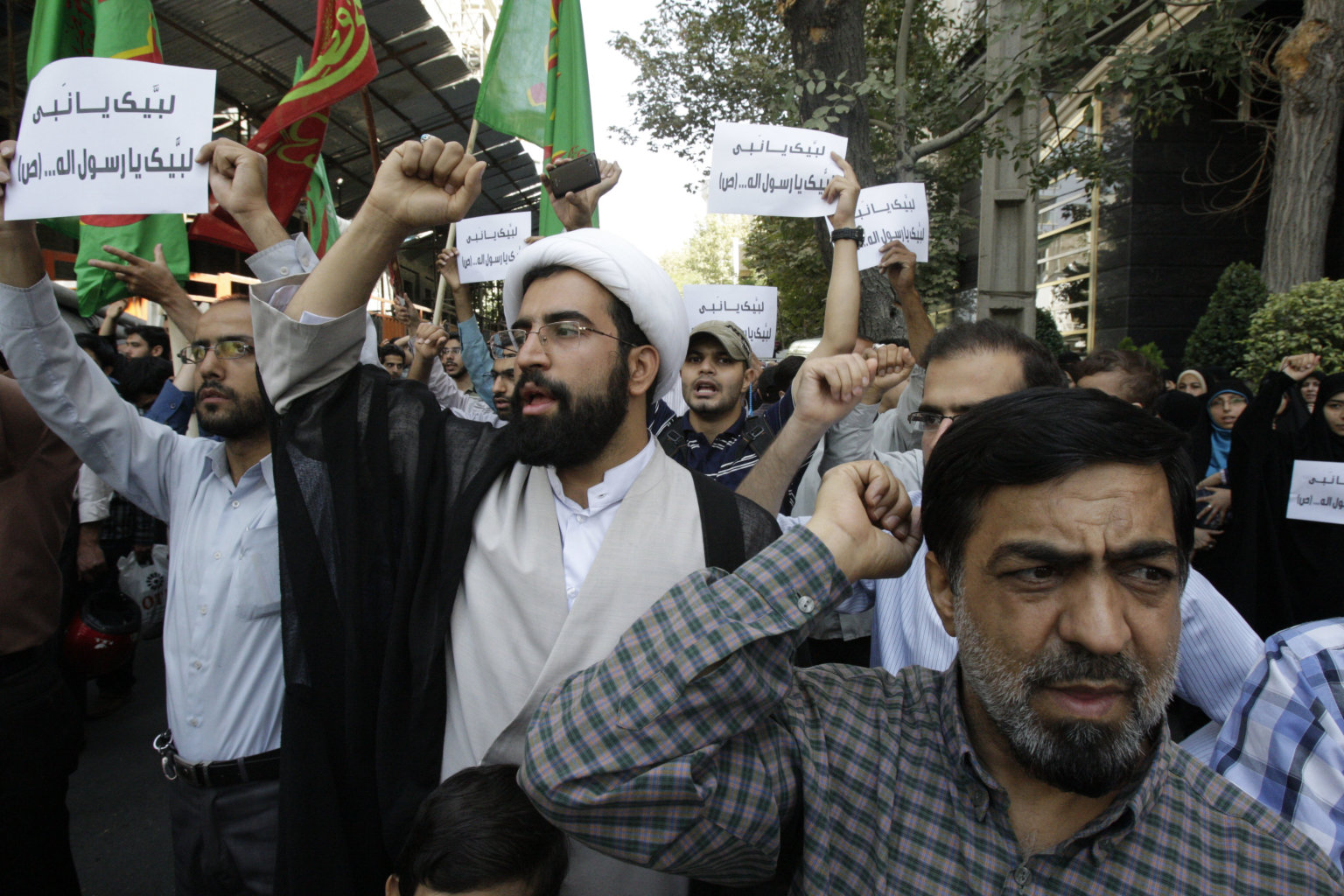
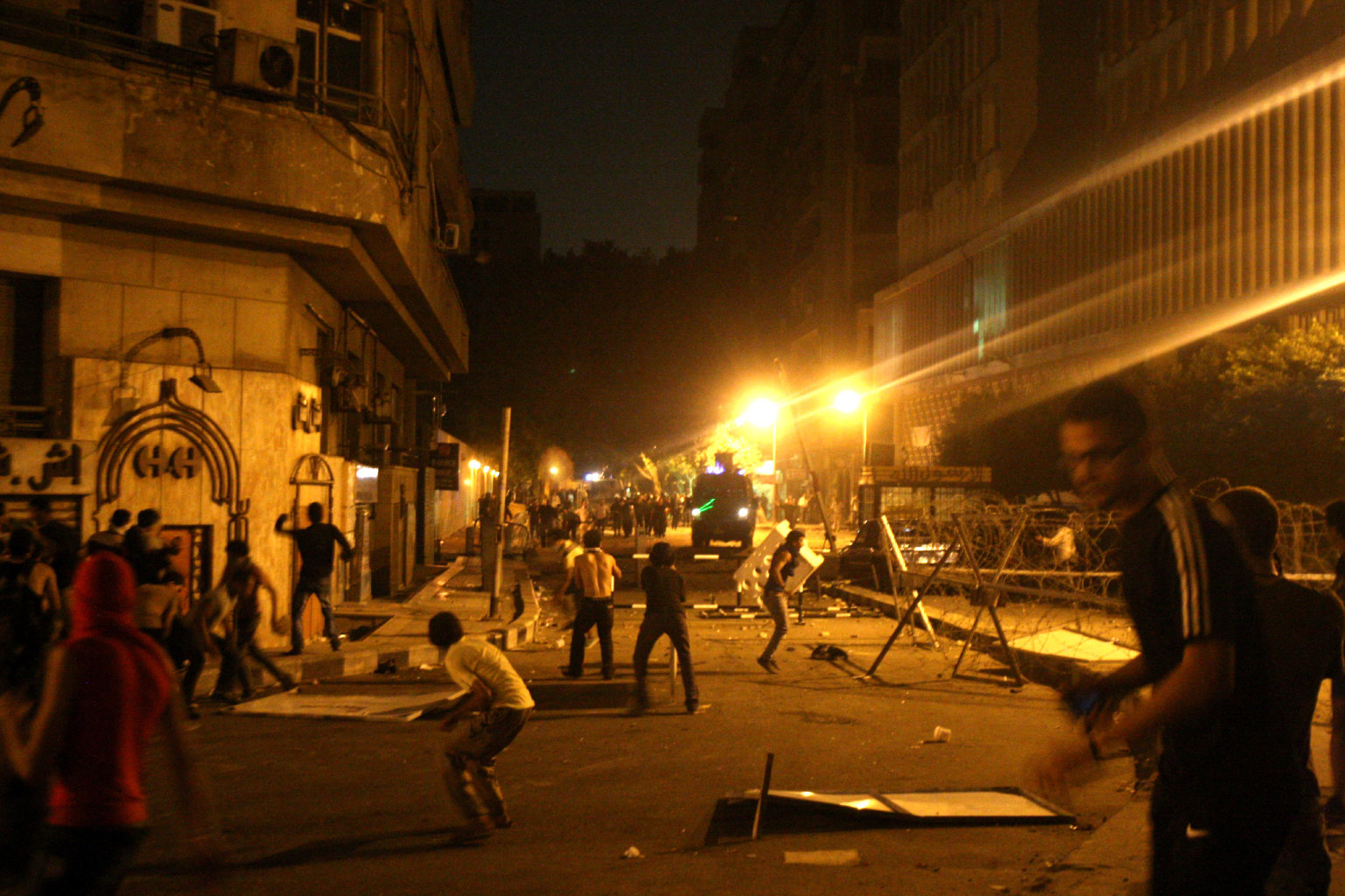
On September 11, during a period of
reflection for many in the United States, our country found itself
under assault once again. Our diplomatic envoys to various countries
in the Islamic world are threatened and some Americans have been
killed.
Many Americans are angered that our
country has been threatened and many more are critical of our current
administration for projecting weakness, rather than strength, which
may have emboldened those who threatened us.
We should project strength as a
country. I am not sure about how flagrant we should be in projecting
that strength, but foreign policy decisions are not made by me. But I
have some questions. People have told me that I ask many questions
but do not provide the answers. Maybe that is because I don't know
the answer, but only the question. Maybe that is because there is no
good answer to some questions. Or, perhaps, it is because the best
way for someone to accept an answer is for that person to think about
the question and discover the answer for themselves.
Here is my first question "Is America
hated in the Islamic world?"
Ask most anyone in the last few days
and the response will likely be YES! But that is likely a
generalization based on the news feeds that are pumped through our
homes and offices. Some people hate the United States, but how are we
to know the extent of that sentiment? How do we even know the
motivation of the people who are part of the mob? I think it is
likely that many mobs in the Islamic world the past year or so had
lots of people who didn't know why they were there. Were they mad?
Yes. Were they whipped up into a fury? Yes.
But, could we not edit video from the
Democratic National Convention in such a way as to present people in
America as Anti-God and Anti-Jerusalem? After all there were people
shouting and booing at the change in the party platform. Does that
mean all Americans are trying to shout down things related to God and
Jerusalem?
What about all of the other people who
were not a part of the mobs? Where is the camera filming the families
in their homes upset at the violence? Were people who were not
participating in the mobs at home because they could not get there?
In other words, if they could have been a part of the mob, would they
have been a part of it? Or were they opposed to it? Were they
indifferent? There are many things we don't know about the people in
the mobs and those who were not in the mobs. We can be sure that some
hate us, but many we just don't know about.
The Second question is “Should we be
hated as a nation?”
As an American I want to say, NO! After
all, we want peace, democracy, and stability in the world. We are the
shining city on a hill, (though we have had some brown outs since
electing our current administration) and stand for what is good and
right in the world. We have the moral high ground. That is what I
want to believe. That is the type of country I want to live in. But
is that the type of country that I actually live in?
I sometimes wonder if we don't act more
like a bully than a positive role model. We flex our muscles with our
military. Project our power far from our shores to make sure we get
our way. We also use our bank account to pay people to agree with us.
Our “foreign aid” looks to me like we are trying to flex our
economic muscles rather than to really help people.
In school, the bully gathered a group
of people around and threatened to punch them if they didn't do what
he wanted. If he had a fat bank account he could also threaten to cut
people off if they did not do what he wanted. The bully was a leader.
He was a leader who lead with force. People would follow him, out of
fear or because they thought they could get what they wanted by
following him. Eventually people lose the fear of a bully and start
to fight back.
A bully is not a good leader. A good
leader is strong, but doesn't have to flex his muscles in front of
everyone. A good leader does what is best, not simple what he wants.
A good leader helps people because it is the right thing to do, not
to control them.
I want my country to be a good leader,
but why do I get the feeling that we have been acting like a bully?
If we are acting like a bully, rather
than a leader, how would we fix it? Well I think that we would have
to have leaders running the country, not bullies. But I think we have
been electing bullies lately. I hope things get better.
As a customer, a smart phone user, and just an American, I would like to think that I can use a product or service if I want to. I changed from an iPhone to Android because it cost less and I like it better. I buy generic at the grocery store because it cost less and I think the quality fine. I use Google maps because I like them better. We can choose and use the apps for our phones and programs or websites for our computers because we like them, and we don't have to ask for permission. (Unless you are a child and have to get permission from your parents or if you consult with your spouse before spending money.)
I like having the freedom to choose which products and services I will use. I don't like that the Government restricts the options I have, but most of the time we don't see the products that we are prevented from using. So, in a sense, we don't know what we are missing. But now with the spread of smart phones and technology, things may be changing. The New York City Taxi and Limousine Commission issued a notice that owners and operators are not allowed to use a new application to collect fares. Here is the notice.
What would we do if we didn't have the grand protectors at the various commissions around to protect us from new ideas and technology? Apparently New York already has contracts to handle cashless transactions. My guess is that deciding which companies can make money off of credit card processing for Taxis and Limousines is too complicated and complex a decision for business owners to make. An arm of the Government should decide which companies should be able to offer credit card processing and payment services in New York.
You would think that a business owner would be able to choose which companies they wanted to use to process their payments. I could choose a service because it was the least expensive, or I like the service, or because its my cousin's company and I want to help him out. That is a simple kind of freedom, the freedom to choose which business to use or which product to buy. Not in New York, I guess.
First of all, I did not watch any of the Democratic National Convention live, but neither did I watch any of the Republican National Convention live. A friend posted the You Tube video of the closing prayer to Facebook and I watched it there. Here is a link to the video and a link to the transcript.
Timothy Dolan, the Archbishop of New York and a Cardinal in the Catholic Church prayed to close the convention on Thursday, September 6, 2012. He also prayed to close the Republican National Convention a week earlier.
His prayer was reverent and distinctively Christian. He did not avoid some of the social issues that the Democratic party supports and the Catholic church opposes. He addressed the issues in a way that some may not have realized, at the time, what he was saying.
Here is an excerpt from the transcript. May we know the truth of Your Creation, respecting the laws of nature and of nature's God, and not seek to replace them with idols of our own making. Give us the good sense not to cast aside the boundaries of righteous living You first inscribed in our hearts before inscribing them on tablets of stone. (From Cardinal Nolan's closing prayer at the DNC)
The bold portions are from the transcript (I did not add them). Note a few issues that are or could be at odds with the general direction of the politics of the Democrat party. First, "respecting the laws of nature" is a reference to ethics based on natural laws. He also asks that God prevent us from replacing the natural laws with "idols of our own making." Catholics have a long history of natural law ethics. Here are a few links for those who are not familiar with natural law. Here is a webpage with some information. And here is a You Tube video (3 1/2 min) briefly explaining natural law.
He also notes the importance of living righteously. This is a reference to both virtue and both the Old Testament and New Testament as a basis for ethics. Catholic thought has a long history of virtue ethics. Here is a link about Catholic ethics in general (it has a section on virtue ethics).
The phrase "you first inscribed on our hearts" is a reference to the New Testament book of Romans and the reference to "tablets of stone" refers to the Decalogue, or more commonly known as the Ten Commandments.
So in this prayer, Cardinal Nolan asked God to help people have an understanding of ethics and morality that is in line with Catholic ethics as grounded by natural law, virtue, the Old Testament, and the New Testament. So what do we make of this? The delegates in the room seemed to agree with Cardinal Nolan as he prayed. Are there parts of the Democratic Platform that are contrary to Christian ethics? I think so.
I think Cardinal Nolan did a great job in his closing prayer. My hat is off to you sir. I also think it is great that the Democratic National Convention made available the opportunity for him to pray to close the meeting. My hat is off to the DNC also. I do think, however, that if God grants Cardinal Nolan's petition, the election won't go well for the Democrats.
That is not to say that Republicans are "God's Party" or anything like that. But I do believe that while the official party platform of the DNC may claim to promote ideals that are in line with Christian ethics, the particular policies advocated by the Democrats are often contrary to Christian ethics. Let me also say that I think Republicans also have similar issues as it relates to policy and Christian ethics, but I believe, on the whole, that their problems are fewer than those of the Democrats.
So I agree with the sentiments of Cardinal Nolan. I also ask God to grant the petitions he prayed for at the close of the DNC.
Seven years ago I was starving for
news. My home was in one of the hardest hit areas on the edge of New
Orleans, and we were wondering what happened. By this time (September
2nd) I was back in the region, not New Orleans, but a bit north in
Mississippi. Our home Church had sent a team to check on some friends
of the pastor and give out some supplies. Being able to serve took my
mind off of the deviation of my community. I was doing something to
help some of the people hurt by the storm, even if it was not my own
community.
Seven years later, its weird. Things
feel much different. My family no longer lives in the New Orleans
area and we have significantly fewer friends that live there than we
did before. Issac was not a Katrina, though it was devastating in its
own right. My wife and I were concerned for the area, for the people
and for our own friends who remain, but we were not glued to the
news. I guess going through Katrina, in the sense that we had more
friends and a home in the disaster area, was quite different for my
family than for the rest of the nation who was not as connected to
the region. We lived in the area that was then under water, and we
knew our home and possessions were there. We knew people who died as
a result of the storm. Now, as I experience Issac as an outsider,
maybe I am beginning to see that Katrina was just another disaster in
a world filled with disasters.
It is interesting to think I might
have felt about Katrina the way I feel about Issac now, if I did not
live in the New Orleans area at the time Katrina struck. For me and
my family, that would be completely different. We learned a lot about
God's provision, mercy, and grace through the post-Katrina life we
lived. We learned that our things (that is our stuff, our material
possessions in our home) were not nearly as important as we treated
them. When you lose everything, you gain a tremendous sense of
freedom. In the months following Katrina we were given many wonderful
gifts by people who wanted to ease our suffering. To put it plainly,
we got a lot of stuff. With that came the loss of the freedom we had
when we had so little. We gained some comfort from our possessions,
but we also had to take care of the possessions and make sure they
were secure.
We tend to think it is the abundance
of things that make us free, but maybe it is the lack of things that
make us free. Maybe each little item we “own” actually ties a
small string to us. More and more stuff equals more and more strings,
which lead to less and less freedom. Maybe that is a lesson that God
wants us to learn. The more we focus on the “stuff” that we have
on earth, the less we can find our delight in God. The less “stuff”
we have, the more opportunities we have to delight in God. Of all the
things we lost in the storm, I knew God would never lose us. And we
never lost God either, because when all was washed away, we still had
a string tying us to God.